Showing posts with label healthy design. Show all posts

Friday, March 2, 2012

What is accessible or universal design?

Basically a universal design is barrier-free design. It is a holistic approach to designing a space to suit anyone. These considerations include: eliminating steps or stairs, roll-in showers, wider doorways to accommodate walker or wheelchairs, lower or adjustable countertops.
Many people have to stay in their current home longer. Many of these homes are not designed with aging in mind. Steps into a shower or tub, stairs to the bedrooms, steps to get in and out of the house, all will be barriers as we get older. Any one may end up on crutches or a wheelchair due to an accident and builder never really take that into account.

Universal or accessible design allows ample room for maneuvering a wheelchair in every space. During a remodel, changes can be made to bring many of these features into an existing home: Replace the tub with a roll-in shower, create room under countertops to allow for a wheelchair to pull up close,  install attractive ramps outside next to steps, widen doorways, and many more. You should consult a design professional about these changes however before you take on such renovation.


An accessible bathroom will have enough clearance under the countertops to allow for a wheelchair, but elegantly hide the plumbing pipes. It is equipped with a roll-in shower with a seat and an area for dressing.

Tuesday, December 6, 2011

Is CORK flooring for you?

Have you been looking at sustainable flooring alternatives to wood flooring.
Read further if you cannot decide if Cork flooring is suitable for you.
Cork flooring has the following characteristics:

- Cork is a renewable resource. The bark of the Cork tree is peeled to make cork products. In a few years, the bark grows back and ready to be harvested again.

- Cork is a fairly good insulator that will not conduct heat like wood or tile flooring. It is not a good option for radiant heat.

- Cork feels great to walk on barefoot because it feels soft and it is never too hot or too cold.

- It is not hard surface, so it is great for children's rooms.

- It is a great choice for areas such as kitchens or laundry rooms, where you stand for long periods of time. However, any water spill should be cleaned up fairly quickly.

- Cork in its nature does not offgas. However be sure that the product you buy is treated with low or zero VOC finish.

- Cork flooring is available in floating panels that snap together and is ideal for a DYI application. There is an air space under the panels. Make sure that a felt underlayment is installed to prevent excessive noise when you walk.
available in many colors (Cork by DuraDesign)

- There are a wide array of finishes and looks available to fit your taste.

You can mix different colors to create a design of your choice.

- Cork flooring can be recycled.

- It is not an ideal product for a sunny area because it fades in bright light.

We love this product because of its wonderful qualities and availability in a variety of colorful finishes.

Keep pollution out of your home


 Keep your indoor air quality at healthy levels, follow these simple steps recommended by American Lung Association.
  • Declare your home a smokefree zone.  Never let anyone smoke indoors. Ask smokers to go outside.
  • Test your home for radon, an invisible gas that causes lung cancer.  Every home should be tested since radon may be found in any home.  If your home has high radon, it can be fixed.
  • Keep humidity levels under 50 percent.  Use a dehumidifier or air conditioner, as needed. Clean equipment regularly so they don't become a source of pollution themselves. Open windows or use the ventilator in the kitchen when boiling liquids.
  • Be sure to replace filters on heaters and purifiers as often as recommended by the manufacturer.
  • Fix all leaks and drips in the home. Standing water and high humidity encourage the growth of mold and other pollutants.
  • Put away food, cover trash and use baits for pest control and not pesticides.
  • Avoid burning wood because it adds pollution indoors and out.  Don't use outdoor wood boilers, also called hydronic heaters, to heat your home's water. They add unhealthy soot to the air in your neighborhood. 
  • Install a carbon monoxide detector in any room with a fireplace, gas heater, gas dryer, or gas stoves. Carbon monoxide is odorless, colorless, and is called the silent killer. The first signs of carbon monoxide poisoning are headaches and flue-like symptoms without a fever.
  • Don't use scented candles or fragrances to hide odors. Figure out what is causing the odor, then clean that up and ventilate to add fresh air.
  • Use cleaning, household and hobby products that are less toxic. Don't store hazardous chemicals in your home.

Thursday, November 17, 2011

Tankless water heaters versus Hybrid water heaters


It really seems like a total waste of energy when you consider traditional water heaters constantly heating a 40 gallons of water even when not in use, day or night. And then if two or more people shower one ends up rinsing with COLD water.

traditional tank water heater
A tank water heater should be replaced afeter 10 years. Most home owners however only replace theirs when it breaks which usually means lots of water every where which can cause other problems. So check the date of intallation on your water heater and act swiftly if approaching the end of life.

As the cost of energy rises, many are switching over to Tankless or Hybrid water heaters. Also there is a 30% federal tax credit allowance for tankless water heater.
Tankless water heaters have been around for a while and widely used in European and Asian countries. Hybrid water heaters are a new technology only available to the masses since 2008.
Here is a comparison of the two:

Tankless water heaters:
There are many foreign and domestic tankless water heater manufacturers.
how a tankless water heater works
- Tankless are generally Gas powered (Natural or Liquid Propane Gas) are the only type that can provide enough hot water, electric models require a lot of power and are not economical. Electricity; however, is needed to control the heating process, the computer that controls the valves. These can be run on a backup battery system if desired at additional cost.

- Tankless water heaters as the name implies do not store any hot water, but they heat water on demand.  The water is forced through a spiral of pipes, called a heat exchanger, and a gas heater heats the pipes which in turn heats the water that flows through the pipe.
Endless hot water since there is no tank to run of hot water. That is important if you want to take a bath and have hot water left over.

-Tankless water heaters are very energy efficient. In fact about 98% efficiency means that only 2% of the energy is wasted on and not used for heating the water that used immediately.
Rheem tankless water heater
Traditional tankless water heaters are 30% to 50% to start with. As sediments and other build up in the tank this number reduce rapidly over time.

-You always get clean water, where as bacteria, rust and sediments are common features of tank water heater as they get older.

- Tankless water heaters are available in different sizes and if sized right, multiple people can take showers at the same time and not to worry about cold showers.

 - Tankless Water Heaters need a minimum flow to operate, usually 05. Gallon per minute (GPM). That is you cannot have the faucets just trickling hot water when brushing or shaving, a bad idea anyway, wastes too much water.

- The cost of tankless water heaters vary anywhere from $300 to $2000 depending on manufacturer and size.  

How a hybrid water heater works
Hybrid Water Heater

GE and Eternal are the two name brands of Hybrid water heaters.

-Hybrids use both a small tank, usually about 2 gallons where the water is kept hot. So instead of having a 40 gallon tank like your regular water the Hybrid works similar to a tankless but has a 2 gallon tank.
The water is drawn from the small tank and the unit replenishes as it is getting used. This allows for  “trickling” hot water, for instance when brushing teeth.

-Hybrids are about 94% efficient due to the heat loss through the 2 gallon tank, but there is a small chance of sediment buildup again because of the small tank.

-Hybrid water heaters cost around $1100 to $2700 depending on the manufacturer and brands.

Friday, April 1, 2011

Green-It-Yourself- a guide to smart home improvement


Put your money where it counts the most. When coosing to renovate, do what can improve your health, help the environment, and save money in the long run.
Focus your dollars on  energy efficicinecy, water conservation and green materials. Always go for the low hanging fruit. Window coverings, weather stripping, low flow facet aerators, and efficient furnace filters cost little and save a lot of money.

I found a new handout from San Mateo County RecycleWorks that is an excellent green guide for DIY-ers.  Click here to download.
Please take some time to read the content.
I hope you enjoy reading the materials and descide to implement a few.
Live healthy, live happy.

Saturday, July 17, 2010

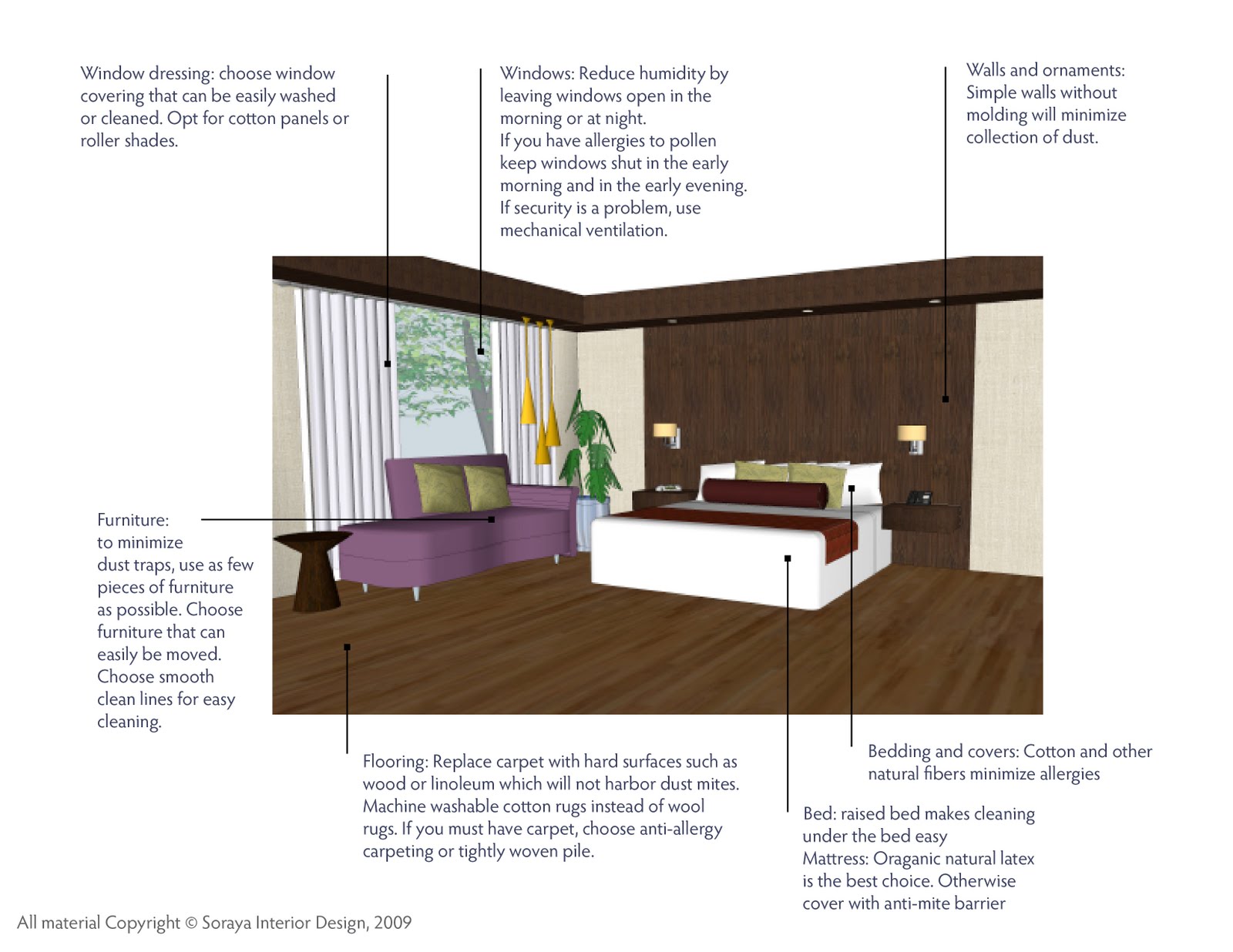
healthy bedroom: 6 tips to reduce allergens in your bedroom

We spend close to 8 hours in our bedrooms. It is supposed to be a soothing and rejuvenating place for our hardworking minds and bodies. Yet many bedrooms are the causes of our allergies and some serious health problems. Here are 6 ways to minimize the causes of allergies in your bedroom:

1. Reduce dust: One of the easiest and least expensive way you can minimize allergies is by de-cluttering. Clutter traps dust and makes cleaning an unpleasant chore.
Get rid of piles of paper (they are also a fire hazard!), reduce the number of furnishings and accessories  in your bedroom. Make sure your vacuum can reach under all furniture.
Hard flooring surfaces are ideal. Good bamboo or linoleum (not vinyl) are easily mopped.
Cotton washable rugs are preferred to other rugs. But if you must have carpet, pick one with tightly woven pile and vacuum often. Avoid detailed architectural moulding and wall art that can trap dust.
(if removing architectural moulding is not an option you can build a box around them. Otherwise, make sure your weekly cleaning includes these.)
Clean air and ventilation filters or replace them frequently. Opt for higher quality filters.

2. Reduce chemical off-gasing: VOCs (Volatie Organic Compunds) are found in many home improvement products including paint and stains. Manufacturers have recently produced great quality paints and stains with zero or low VOC. You could paint your walls using 0 or low VOC paint to seal the old paint. Minimize items with stain or make sure the stain is zero VOC with new furniture or hard wood flooring.

3. Avoid synthetic fibers on your bed: Use cotton sheets. If natural latex mattress is not an option, get dust-mite covers for all your bedding.

4. Increase Ventilation:  It is very important to have fresh air in any room.  If you are not allergic to pollen open your windows early in the morning and early evening. Otherwise, mechanical ventilation should be utilized daily to prevent moisture buildup. Moisture buildup will cause mold.

5. Black mold hunt: If you get condensation on your windows, you may be at risk for having mold.  Look for black mold behind drapes, closet interior walls, and around the window sills. It may look like round penny size spots or black dust. If you find mold do not blow it in the air. Do not use a spary cleaner as it will blow the mold in the air. Make a simple solution of water, vinegar and a drop of soap. Protect your nose and mouth. Wear rubber gloves. Wipe the mold clean with a sponge soaked in the solution.

6. Cleaning agents: Most household cleaners contain irritants and chemicals. Use natural cleaning products free of chemicals. There are many safe and multi-purpose cleaners such as Nature’s Source,  Seventh Generation or Dr. Bronner's Tea Tree Oil soap, on the market. Remember to read the label. Just because it says "Green" or "Natural" it may not be safe.

Friday, July 16, 2010

sustainable design makes a lot of sense to your health

Green or Sustainable Building is the practice of creating healthier and more resource and energy efficient models of construction, renovation, operation, maintenance, and demolition.

According to the US Green Building Council (USGBC), as of January 2006, the annual market for Green Building in products and services was $7 billion, a 37% growth over 2004 Over 531 million square feet of commercial building space has been registered or certified under LEED.
Green Design has significant benefits:


Contributes to better health
EPA studies indicate indoor levels of pollutants may be two to five times higher – and occasionally more than 100 times higher – than outdoor levels. Studies with 30,000 subjects showed that  there are significant relationship between low ventilation levels and higher carbon dioxide concentrations – a common symptom in facilities with sick building syndrome. Green buildings instead use alternative building materials that do not emit toxins, like formaldehyde or VOCs (Volatile Organic Compounds).

Saves you money in the long run 
A Well-designed green buildings will be more energy efficient and have lower utility costs. Recent studies indicate that with an upfront investment of 2% in green building design, can result on average in savings of 20% of the total construction costs in lifecycles– This is more than ten times your initial investment.

Increases your productivity
Factors considered in Green design include abundant daylighting, individual climate controls, and outdoor views increase employee and tenant satisfaction, which improves productivity. A study by Carnegie Mellon University measuring the relationship between increased lighting control and productivity showed an average increase of 7.1% in productivity.